
Audiovisual Design with Purpose: The Importance of Integrating Technology from the Concept Phase
Alberto Arranz
Co-CEO, Sales & Marketing Manager at TECCO
Audiovisual technology is often integrated as a last-minute patch in major architectural projects. This article addresses the mistake of designing spaces without first considering the use case and advocates for integrating audiovisual engineering from phase zero of the project. Technology should not dictate the space; purpose and experience should dictate the technology.
I've been arriving late to projects for years.
In my almost 15 years in the audiovisual sector, there's a recurring feeling: arriving late to projects. And it's not a scheduling or planning issue, nor is it about decision-making processes that drag on forever. It's an endemic problem in our industry.
Those of us in technology, and specifically in audiovisual integration, have grown accustomed to being the last ones invited to the party. We're called in when the project is in its final stretch, the walls are finished, the conduits are sealed, and the furniture is coming through the door. And right at that moment, staring at an immaculate wall a month before the grand opening, someone clears their throat and drops the bombshell: "Hey... we'll need to put some tech in, won't we?"
And that's where the drama begins. A unique architectural project turns into a festival of bodges.
The Danger of "Technology by the Kilo"
Suddenly, we find ourselves discussing budgets of tens or hundreds of thousands of euros. We're often influenced by technologies we've seen in other spaces—which may have nothing to do with our own—that impressed us so much we want to replicate them without considering their real purpose.
We obsess over resolutions, a pixel pitch that not even a hawk could distinguish, or brightness levels that could give you a tan. We scrutinise datasheets as if we were poring over the specs of the next high-end smartphone we're about to buy. But hardly anyone stops to ask the basic questions that truly matter before ordering a single piece of equipment: How do we want technology to transform this space? What will the use case be? What experience do we want the user to have?
Shoving in hardware by the kilo and forcing it to fit without first defining the use case is a recipe for gradual failure and guaranteed future frustration. We all know the result:
- Integrations that are an eyesore and disrupt the aesthetic harmony of the space.
- Equipment installed in a hostile environment because no one considered that technology needs to breathe too.
- Design lines ruined by cables poking out where they shouldn't.
- A frustrated end client with an expensive audiovisual ecosystem that no one on their team knows how to operate.
Technology should never be an afterthought that constrains a space. It is creativity, design, and the experience itself that should dictate the technology.
The Magic of Phase Zero
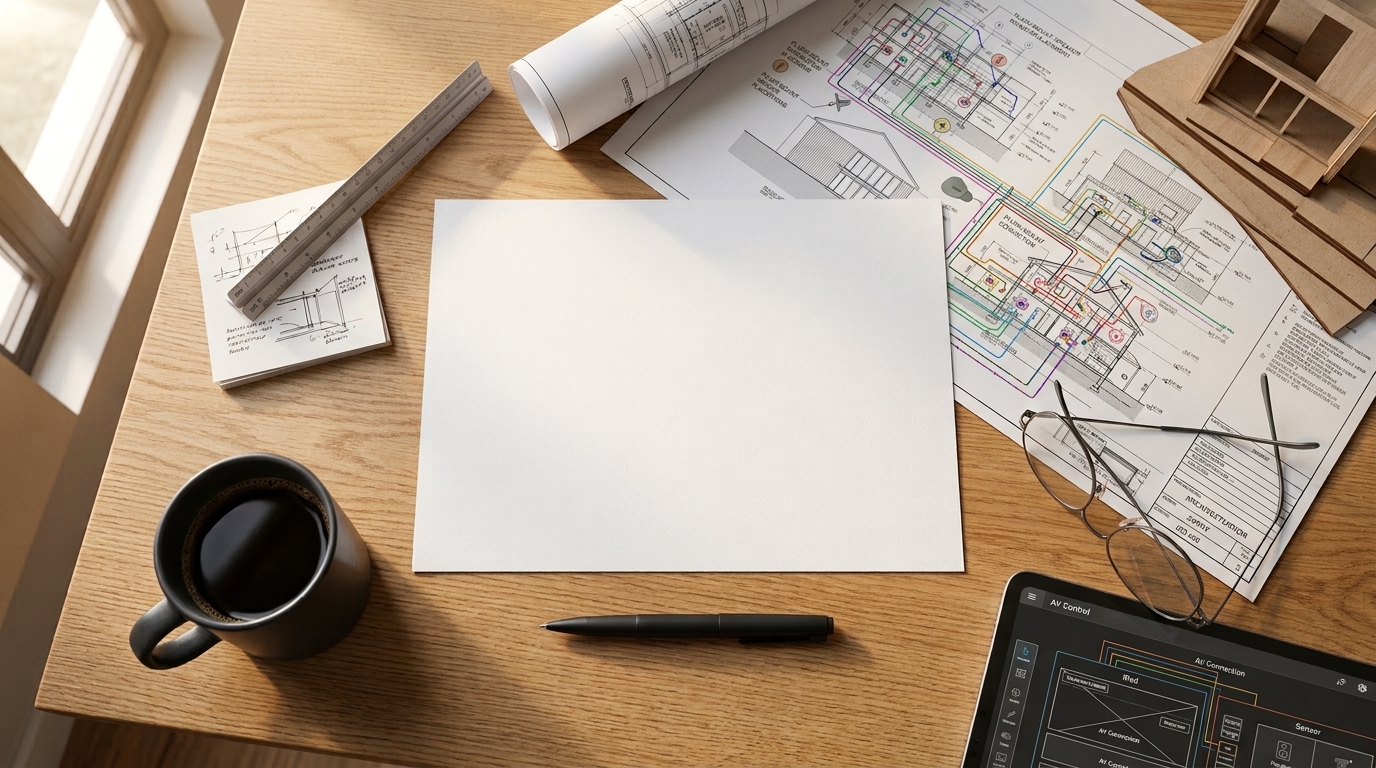
That's why at TeccoAV, we are so insistent (if not to say, persistent) about getting involved in projects from their conceptual phase. Our real value as subject matter experts is being at the table when the project is just a coffee and a blank sheet of paper.
Without first understanding the purpose of the space, magic only happens by chance. Being in phase zero allows us to design the integration from the ground up, calculate volumes, and hide what shouldn't be seen, turning the audiovisual ecosystem into true invisible architecture.
Content: The Other Major Battle
This is another common war in our sector. Clients who invest huge budgets in spectacular visual infrastructures, but don't stop to think about how they are going to "feed" them. It's a disaster waiting to happen.
The most spectacular engineering deployment in the world, without content created natively to give it visual meaning, is often just "a very expensive black rectangle" hanging on the wall.
Purpose-Driven Engineering Cannot Be Improvised
If we want to stop selling "screens and speakers" and start creating truly immersive and transformative spaces, we have to demand our seat at the design table from day one. Purpose-driven engineering, creativity, and out-of-the-box thinking can't be improvised in the final week of construction.
To the architects, interior designers, integrators, and consultants reading this: how much trouble, extra cost, and ugly cabling could we save if technology finally stopped being the last-minute patch?
Want to transform a space through technology? Let's grab a coffee and design on that blank sheet of paper.
About the author
Don't miss the next Insight
Subscribe to TECCO Insights on LinkedIn and get our analysis on LED, digital signage and immersive experiences straight to your feed.
Subscribe on LinkedIn
Invisible technology, real impact: The hidden engineering of a premium auditorium
In a corporate auditorium, visual excellence demands flawless audio. We explore how advanced audiovisual engineering integrates large-format displays, invisible microphones (beamforming), and automated control.
Read article →
Total Control and Zero Surprises: The Revolution in DOOH Monitoring
How SmartSense, TECCO's proprietary IoT electronics, turns any DOOH display into a smart asset: real-time telemetry, configurable alerts, and tangible OPEX reduction.
Read article →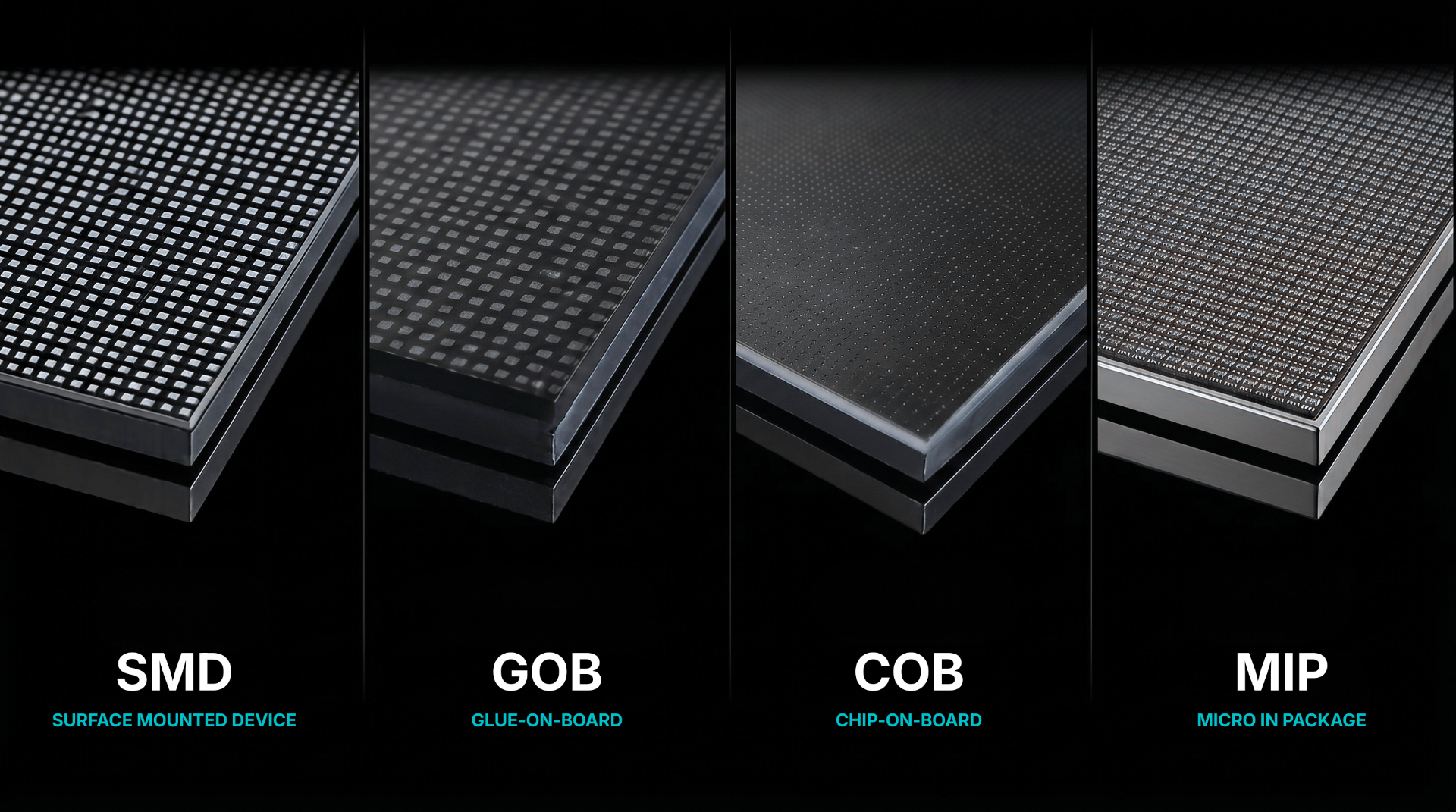
SMD, GOB, HOB, COB or MIP: The definitive guide to choosing the right LED technology for your project
The differences between SMD, GOB, HOB, COB and MIP encapsulation, and how to choose the right one for your project.
Read article →Want to apply this to your project?
Our engineering team replies within 24 hours with an initial proposal.
Let's talk →